
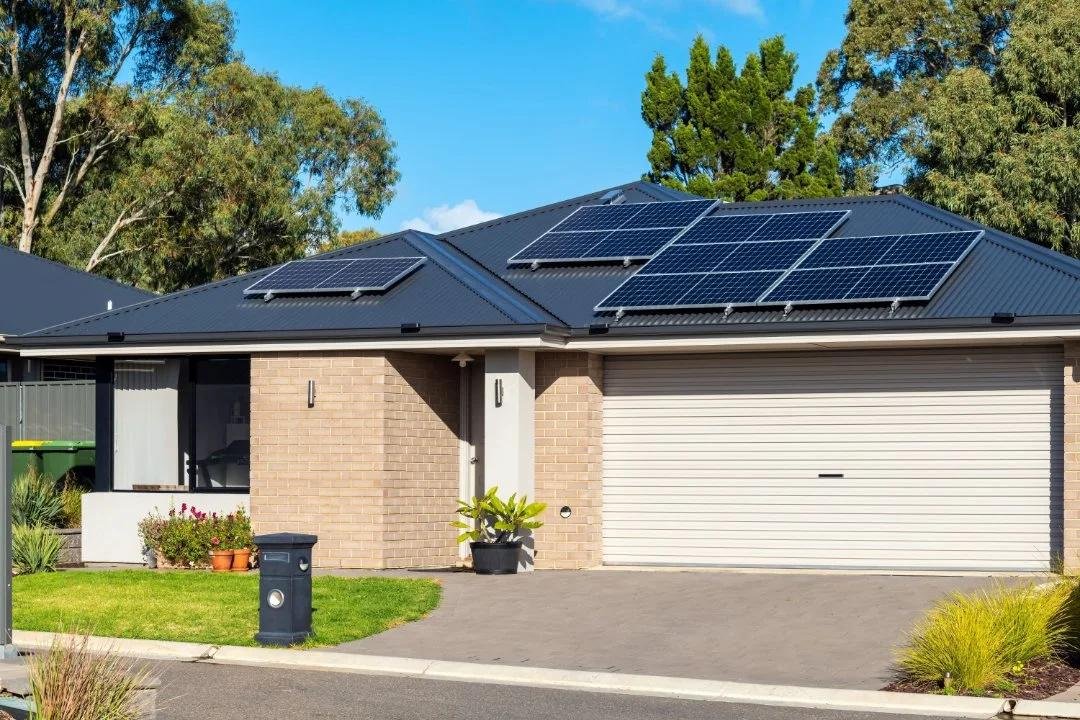
Perth gets plenty of sunshine, which is great news if you’re thinking about rooftop solar.
But choosing the right system size can be surprisingly confusing.
One installer recommends 6.6kW. Another suggests 10kW. Someone on Facebook reckons you need enough panels to power half the neighbourhood.
So what should you actually install?
For homeowners researching a 10kW solar system in Perth, the key question isn’t whether a larger solar system can generate more electricity.
It’s whether your household can make good use of that electricity.
This guide compares common system sizes, explains what a 10kW setup involves and helps Perth homeowners understand when going bigger may—or may not—make sense.
Is a 10kW Solar System Worth It in Perth?
A 10kW solar system can be worth considering for Perth households with higher electricity consumption, substantial daytime usage or plans for future electrification.
It may be especially relevant where the household regularly operates:
- Air conditioning
- Pool pumps
- Electric hot-water systems
- Home offices
- Multiple electrical appliances
- Electric vehicles
- Other significant daytime electrical loads
A 10kW solar system can also be considered when planning future battery storage.
However, a larger system isn’t automatically more economical.
If a household uses relatively little electricity during daylight hours and exports most of its solar generation, the financial value of additional panels depends heavily on the applicable export tariff and system cost.
The right solar size is the one that fits your roof, usage, budget and future needs.
What Does a 10kW Solar System Actually Mean?
A 10kW solar system refers to approximately 10 kilowatts of rated rooftop solar-panel capacity.
This is the combined rated capacity of the solar panels under standard test conditions.
It does not mean the system produces exactly 10kW continuously throughout the day.
Actual generation changes with:
- Sunlight intensity
- Roof orientation
- Panel tilt
- Shading
- Temperature
- Weather
- Inverter capacity
- System performance
There is also an important difference between kW and kWh.
kW (kilowatts) describes power at a particular moment.
kWh (kilowatt-hours) describes an amount of electrical energy generated or consumed over time.
Your electricity bill is primarily concerned with kWh.
When comparing solar systems, both measurements matter.
How Many Solar Panels Are Needed for a 10kW System?
The number of panels depends on the rated wattage of each module.
For example, a system using approximately 440-watt panels would generally need around 23 modules to reach just over 10kW of rated panel capacity.
Higher-wattage panels may achieve a similar total capacity using fewer modules.
But panel count is only part of the story.
Your installer must also consider usable roof space, safe mounting locations, setbacks, orientation, structural suitability and shading.
A large roof covered in shade may be less useful than a smaller roof with excellent solar exposure.
And while more panels can be beneficial, your roof doesn’t need to look like a solar farm to be a good investment.
6.6kW vs 10kW Solar System in Perth
Two of the system sizes Perth homeowners commonly compare are 6.6kW and 10kW.
Both can be suitable, depending on the property.
When a 6.6kW Solar System May Make Sense
A 6.6kW system may suit homes with moderate electricity consumption, limited available roof space or relatively modest future electricity requirements.
It may also be appropriate where the household’s available budget favours a smaller initial investment.
When a 10kW Solar System May Make Sense
A 10kW system may suit homes with higher electricity usage, more people living at the property, multiple electric appliances or future plans involving EV charging and battery storage.
The additional generation capacity can be useful where the electricity is consumed directly or stored in a compatible battery.
Comparison at a Glance
| Consideration | 6.6kW Solar | 10kW Solar |
|---|---|---|
| Panel capacity | Approx. 6.6kW | Approx. 10kW |
| Roof space | Generally less | Generally more |
| Daytime generation potential | Lower | Higher |
| Upfront investment | Generally lower | Generally higher |
| Higher-consumption homes | Depends on usage | Often worth assessing |
| Battery planning | Possible | Possible |
| Best choice | Based on property needs | Based on property needs |
Neither system size automatically guarantees better savings or a shorter payback period.
The best comparison uses actual electricity data and a site-specific design.
How Much Electricity Can a 10kW Solar System Generate in Perth?
Perth’s sunshine creates favourable opportunities for residential rooftop solar, but system generation still varies substantially throughout the year.
An appropriately designed 10kW system can generate a significant amount of electricity during suitable daylight conditions.
However, its output will not be constant.
A north-facing array may produce a different daily generation pattern from an east-west installation.
Shading, panel positioning, equipment performance and seasonal weather also influence the result.
Summer and winter generation should not be treated as identical.
Before purchasing a system, ask for a site-specific annual generation estimate that explains the assumptions behind the figures.
For an independent starting point, the Australian Government recommends the SunSPOT solar and battery calculator.
It can help estimate solar-system sizing and potential performance using information about your property.
Why Your Electricity Usage Matters More Than a Big System Number
Consider two hypothetical Perth households.
Household A: Moderate Energy Usage
A smaller household uses relatively little electricity during daylight hours.
Major appliances operate mainly after everyone gets home.
Although a large solar system could generate considerable electricity, much of its daytime production may be exported unless the household changes its usage patterns or adds suitable storage.
Household B: Higher Daytime Energy Usage
A larger family regularly runs air conditioning, home-office equipment and other appliances during the day.
They are also considering an electric vehicle.
A larger solar system may provide more useful generation because the household has greater opportunities to consume solar electricity as it is produced.
These examples show why a system should be designed around electricity behaviour—not simply the number of bedrooms.
A four-bedroom home doesn’t automatically need 10kW any more than every ute needs a towbar.
Does Perth’s Solar Feed-In Tariff Affect the Decision?
Yes.
For Perth homeowners, the value of using your own solar electricity can differ from the amount received for exporting excess generation.
Under Synergy’s Distributed Energy Buyback Scheme, eligible exports can receive time-dependent payments.
The value of exported electricity may depend on when it reaches the network and which electricity plan or scheme applies.
You can review the latest information on Synergy’s Distributed Energy Buyback Scheme page.
Why does this matter?
Because a larger solar system is not necessarily the best financial choice if most additional electricity is exported at a relatively low rate.
A more useful question is:
How much of the electricity produced by a proposed 10kW system will your household actually use?
That is what should drive the system-sizing conversation.
Are There Network Limits for a 10kW Solar System in Perth?
Yes, network connection and export requirements need to be considered.
Western Power has updated its technical requirements to permit larger single-phase inverter capacity in certain standard connection arrangements, but installation and export conditions still apply.
Inverter capacity, solar-panel capacity and permitted export capacity are not necessarily the same thing.
For example, a property may be able to install a particular inverter size while still having a limit on the electricity it can export.
The exact arrangements depend on the network connection, equipment configuration and applicable approvals.
You can review the requirements through Western Power’s technical guidance.
A suitable installer should check these requirements as part of preparing a quotation.
For Perth homeowners, this is an important reason not to order equipment based only on an advertised package size.
Should You Install a Battery With a 10kW Solar System?
A solar battery may be worth considering if you regularly generate more solar electricity than the household uses during the day.
Instead of exporting all of that surplus electricity, a compatible battery can store some for later consumption.
This can be relevant where households have substantial evening electricity demand.
However, the right battery size depends on actual exports, household consumption, system compatibility and future requirements.
A 10kW solar system does not automatically require a particular battery capacity.
Nor does choosing a larger battery guarantee better financial returns.
For homeowners planning solar now but battery storage later, it can be worthwhile discussing compatible system architecture and future installation options during the initial assessment.
Read more about SolarAide’s solar battery installation services in Perth.
What About Solar and Battery Rebates in Western Australia?
Eligible solar installations may qualify for federal support through the Small-scale Renewable Energy Scheme, commonly reflected through Small-scale Technology Certificates (STCs).
Separate battery incentives may also be available for eligible installations.
However, solar-panel incentives and battery incentives have different eligibility conditions.
For Perth homeowners considering battery storage, there may be applicable WA and federal support programs, subject to current scheme requirements.
These conditions can change, so it’s important to review the latest information before committing to an installation.
For more detail, read SolarAide’s WA Battery Rebate guide.
Rebates should help inform the financial assessment, but the system itself should still suit the household.
Buying an oversized system simply because an incentive exists is rarely a substitute for proper planning.
Five Questions to Ask Before Buying a 10kW Solar System
1. How Much Electricity Does My Home Use?
Review your electricity bills over the past year.
Seasonal changes can have a significant impact on household electricity use.
2. When Do We Use the Most Electricity?
Daytime consumption matters because direct use of solar electricity can help reduce purchases from the grid.
3. Is My Roof Suitable?
Panel layout, shading, roof condition and orientation should be assessed before choosing a system size.
4. What Are the Network Requirements?
Your installer should confirm the relevant inverter connection and export conditions.
5. Will My Electricity Usage Increase?
Future changes such as EV charging, additional air conditioning, electric hot water or battery storage can affect the system design.
Thinking about these changes early can help you make a more informed decision.
SolarAide: Solar Panel Installation in Perth
SolarAide provides residential solar and battery solutions across Perth from its local Bayswater operation.
Our approach is to recommend a system based on the property rather than simply pushing the biggest available package.
For Perth homeowners considering a 10kW system, we assess:
- Electricity consumption and usage patterns
- Available roof space and orientation
- Shading and property conditions
- Suitable solar-panel and inverter configurations
- Network connection requirements
- Battery compatibility
- Future household energy requirements
- Applicable solar incentive conditions
SolarAide’s Perth team focuses on residential solar panel installation, solar batteries and combined solar-and-battery systems.
We service Perth and surrounding areas, including Bayswater, Morley, Bassendean, Maylands, Mount Lawley, Midland, Guildford, Inglewood and nearby suburbs.
Explore our Solar Panels Perth service or learn more about SolarAide Perth.
Frequently Asked Questions
Is a 10kW solar system too big for a Perth home?
Not necessarily. A 10kW system may be appropriate for a household with higher electricity consumption and suitable roof space. However, smaller homes with limited daytime consumption may find another size more economical.
How many panels are needed for 10kW solar in Perth?
The number depends on individual panel wattage. For example, approximately 23 panels rated around 440W each would produce just over 10kW of rated panel capacity.
Is a 10kW solar system better than 6.6kW?
A 10kW system has greater generation capacity, but it is not automatically the better financial choice. Household electricity usage, roof conditions, installation cost and export arrangements determine which size is more suitable.
Can I add a battery to a 10kW solar system later?
Often, yes. The proposed battery, inverter and electrical configuration must be compatible. Discussing future battery plans during the initial solar design can make later decisions easier.
Can a 10kW solar system run air conditioning?
A 10kW rooftop solar system can contribute to the electricity used by air conditioning during daylight hours. The amount covered depends on solar generation, the air conditioner’s power requirements and other household loads.
Can SolarAide install a 10kW solar system in Bayswater WA?
SolarAide provides residential solar installation from its Bayswater WA operation. Whether a 10kW system suits a particular property depends on the roof, electricity usage, network requirements and site assessment.
Is a 10kW Solar System in Perth Right for You?
A 10kW solar system can be a useful option for Perth households with higher electricity demand, appropriate roof space and plans for future energy upgrades.
But solar isn’t a competition to see who can fit the most panels on the roof.
The right system should make financial and practical sense for the property.
Before choosing between 6.6kW, 10kW or a larger installation, take the time to review how much electricity your home uses and when you use it.
That information provides a much stronger starting point than choosing a package based on its advertised capacity alone.
Get a 10kW Solar Quote in Perth
Considering rooftop solar for your Perth home?
SolarAide can assess your roof, electricity requirements and future energy plans to help determine whether a 10kW system—or another size—would be more suitable.
SolarAide Perth — Bayswater WA
Call 1300 158 441 or request a free solar quote.
SolarAide — Residential Solar & Battery Solutions Across Perth, Western Australia.