
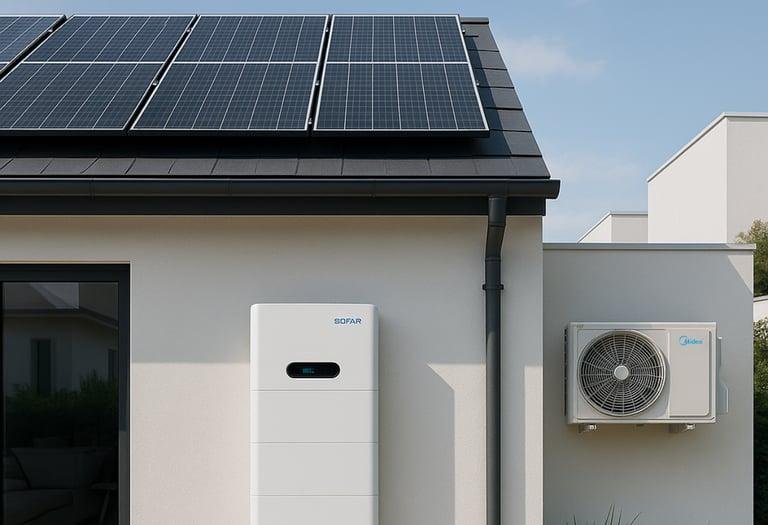
Melbourne weather has a reputation. One minute you’re reaching for a jumper, the next you’re wondering whether the air conditioner can keep up with the afternoon heat.
And when summer arrives, there’s another familiar concern: the electricity bill.
If you’ve already installed rooftop solar, or you’re thinking about it, you might be asking:
Can solar panels run air conditioning in Melbourne?
The short answer is yes. Solar panels can help supply the electricity your air conditioner uses during daylight hours. The amount of grid electricity you avoid depends on your solar production, the air conditioner’s actual electricity consumption and what else is running in your home.
Let’s explore how solar and air conditioning work together, when they make the most sense and what Melbourne homeowners should know before upgrading.
Can Solar Panels Run Air Conditioning in Melbourne?
Yes. A standard grid-connected rooftop solar system can help power your household appliances, including reverse-cycle air conditioners.
You generally don’t need a special solar-only air conditioner. Your solar inverter converts electricity generated by your panels into a form your household can use.
When your panels are generating electricity, that power can contribute to operating your air conditioner alongside other appliances.
If your home requires more electricity than your solar system is generating, the difference can be supplied by the grid.
For example, a Melbourne homeowner running their air conditioner on a sunny afternoon may be able to cover a substantial share of the cooling demand using rooftop solar.
On an overcast day, or when multiple major appliances are operating, grid electricity may still be needed.
The important point: solar can reduce the electricity you buy to run your AC. It doesn’t guarantee your cooling will be free.
Why Solar and Air Conditioning Work Well Together
One useful feature of solar-powered cooling is that daytime solar production can coincide with periods when a home needs air conditioning.
On sunny summer days, rooftop solar often generates strongly through the middle of the day.
That’s also when some households are using cooling to keep indoor temperatures comfortable.
The combination can be particularly useful for Melbourne households with:
- Family members at home during the day
- Home offices
- Regular summer air-conditioning use
- High daytime electricity consumption
- Existing solar systems with unused daytime generation
Rather than sending all surplus electricity back to the grid, a household can use some of it to operate its cooling system.
It’s a practical example of making your own solar electricity work harder.
After all, if your roof is generating electricity while you’re sitting inside slowly melting, that’s worth investigating.
How Much Solar Do You Need to Run an Air Conditioner?
There isn’t one solar-system size that suits every air conditioner or every Melbourne home.
The answer depends on two important things:
How much electricity does your air conditioner consume?
How much electricity is your solar system producing at the same time?
An air conditioner described as a 5kW cooling system does not necessarily consume 5kW of electricity. The advertised cooling capacity and the unit’s electrical power input are different measurements.
A modern reverse-cycle system can provide more heating or cooling output than the electrical energy it consumes because it transfers heat rather than generating it directly.
The Australian Government explains this distinction in its heating and cooling guidance.
When assessing your system, consider:
Air Conditioner Type
A single-room reverse-cycle split system usually has very different electrical requirements from a large ducted system cooling an entire house.
Solar-System Size
A larger solar array may generate more daytime electricity, provided the roof, orientation, shading and installation conditions are suitable.
Other Household Appliances
Your solar system may also be supplying electricity to your refrigerator, washing machine, pool pump, computers and other equipment.
Time of Day
Solar generation changes throughout the day. Morning, midday and late-afternoon production are rarely identical.
Home Insulation and Cooling Requirements
Room size, insulation, window exposure, external shading and thermostat settings all influence cooling demand.
The most useful solar-and-air-conditioning system is one designed around your actual home—not simply the biggest system that will fit on your roof.
Is Reverse-Cycle Air Conditioning a Good Choice for Melbourne Homes?
Reverse-cycle air conditioning is worth considering because the same system can provide both cooling and heating.
For Melbourne homeowners, that versatility is particularly useful.
Summer might have you reaching for the cooling remote, while winter can have you reaching for a blanket before breakfast.
A suitably selected reverse-cycle system can help manage both situations.
Benefits include:
- Heating and cooling from one system
- Efficient electric operation
- Options for individual rooms or multiple areas
- Compatibility with conventional household solar electricity
- Reduced reliance on gas heating where an appropriate electric replacement is installed
When comparing products, look at the Australian Zoned Energy Rating Label, which provides energy-efficiency information across different climate zones.
The right system should be selected according to the space you need to heat and cool, not just its advertised capacity.
Can You Run Air Conditioning on Solar at Night?
Not directly from rooftop solar generation, because solar panels do not produce useful electricity after sunset.
However, there are two common options.
Option 1: Use Grid Electricity
Most grid-connected homes continue using electricity from the grid when solar generation is unavailable or insufficient.
This allows your air conditioner to operate normally at night, although ordinary electricity charges apply.
Option 2: Add Battery Storage
A compatible home battery can store some excess solar electricity generated during the day for later use.
Depending on the battery capacity, available charge, inverter power output and other household loads, stored electricity may help run your air conditioning after sunset.
A battery is not automatically necessary to benefit from solar-powered cooling.
For some homes, maximising daytime solar consumption may offer a useful first step before considering battery storage.
Five Ways to Make Better Use of Solar for Summer Cooling
1. Use Cooling During Strong Solar-Generation Hours
When practical, schedule cooling for periods when your solar system is generating well.
Check your solar monitoring app rather than assuming production is the same every day.
2. Keep the Heat Outside
Close windows and doors while the air conditioner is operating.
Use blinds, curtains and external shading to reduce unwanted heat entering the home.
There’s little point paying to cool the house while leaving the afternoon sun an open invitation.
3. Choose a Sensible Temperature
A moderate thermostat setting can reduce the amount of work your air conditioner needs to do.
The Australian Government’s summer energy-saving guidance recommends considering thermostat settings around 25–27°C for cooling.
Comfort needs vary, but setting the thermostat unnecessarily low can increase energy consumption.
4. Maintain Your Air Conditioner
Keep filters clean and arrange appropriate maintenance according to the manufacturer’s instructions.
An air conditioner that isn’t operating properly may struggle to cool the room effectively.
5. Consider Future Energy Needs
If you’re planning to install an EV charger, battery, heat-pump hot-water system or additional air conditioning, discuss those plans while designing your solar system.
Considering everything together can help avoid an undersized system later.
What If You Already Have Solar but Your Cooling Bills Are Still High?
This is a common situation.
Solar panels can generate plenty of electricity during daylight hours, but your bill may remain high if much of your household consumption occurs outside those hours.
Other possible reasons include:
- An undersized solar system
- Increased electricity consumption
- Shading or lower-than-expected generation
- An inefficient air-conditioning unit
- Poor insulation or excessive heat entering the home
- Electricity tariff changes
- A mismatch between daytime solar generation and household usage
Before purchasing additional panels or a battery, review the actual electricity data.
Sometimes the most useful change is adjusting when certain appliances operate.
Other homes may benefit from additional solar capacity, a more efficient air conditioner or suitable energy storage.
The right answer depends on the property.
Solar Air Conditioning Melbourne: How SolarAide Can Help
SolarAide provides rooftop solar, battery storage and energy-efficient reverse-cycle air-conditioning solutions across Melbourne and Victoria.
Our approach begins with the property and its electricity requirements.
For homeowners considering solar-powered cooling, we can assess:
- Existing rooftop solar capacity
- Household electricity consumption
- Roof space and shading
- Room dimensions and cooling requirements
- Suitable reverse-cycle air-conditioning options
- Whether battery storage would provide additional value
- Relevant eligibility conditions for available incentives
From Dandenong and Melbourne’s south-east to surrounding Victorian service areas, SolarAide helps homeowners plan more integrated household energy systems.
Explore our air-conditioning solutions or residential solar installations.
Frequently Asked Questions
Can a 6.6kW solar system run air conditioning in Melbourne?
A 6.6kW rooftop solar system can help supply electricity to an air conditioner during daylight hours. Whether it covers the full electrical demand depends on actual solar generation, the air conditioner’s electricity consumption and other household loads.
Do I need a battery to run my air conditioner on solar?
No. A conventional grid-connected solar system can help supply air-conditioning electricity during daylight hours. Battery storage becomes relevant when you want to use some stored solar energy later.
Is solar air conditioning worth it in Melbourne?
It can be beneficial for households that use cooling while solar panels are generating. The financial outcome depends on electricity usage, equipment, installation costs and how much solar electricity is consumed at home.
Can solar panels power ducted air conditioning?
Solar generation can contribute to the electricity used by ducted air conditioning. However, larger ducted systems may have substantial power requirements, so the complete household load needs to be considered.
Can SolarAide install both solar panels and air conditioning?
Yes. SolarAide provides residential solar and reverse-cycle air-conditioning solutions across its Victorian service area and can assess how the two systems may work together.
Stay Comfortable This Summer With SolarAide
Melbourne’s weather might be unpredictable, but your household energy setup doesn’t have to be guesswork.
Whether you’re installing solar for the first time, upgrading your air conditioner or exploring battery storage, a carefully designed system can help you make better use of the electricity your home generates.
Planning solar air conditioning in Melbourne?
Speak with SolarAide about a solution tailored to your property, household usage and comfort needs.
Call 1300 158 441 or request a free quote.
SolarAide — Solar, Batteries & Energy-Efficient Air Conditioning Across Melbourne and Victoria.